Zoning the Compute Boom: The Board-Level Risk in Data Center Siting

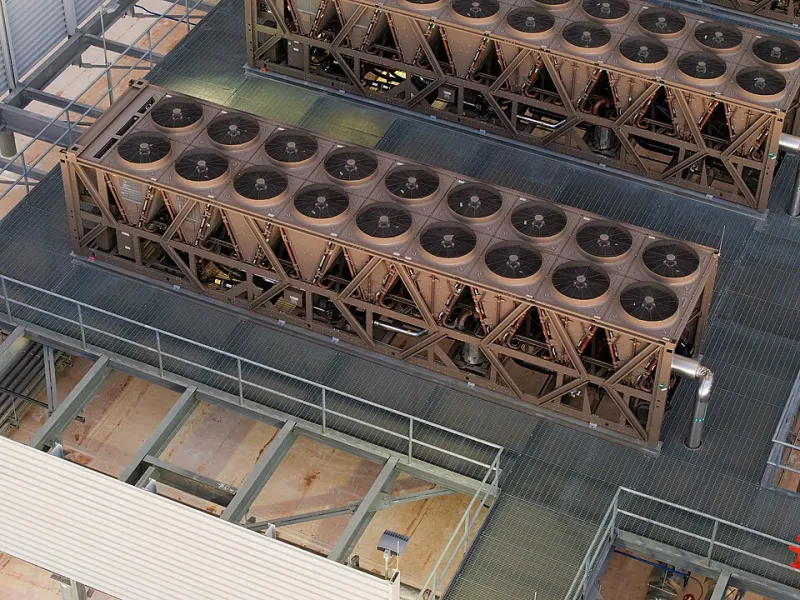
Photo: The original uploader was Tablizer at English Wikipedia. Later versions were uploaded by Clh288 at en.wikipedia., Public domain, via Wikimedia Commons
Data center siting used to be a facilities decision. A parcel had power, fiber, and a willing county, and the project moved. In 2026, the calculus is more complicated. AI capacity demand has pushed compute buildouts into new regions, and local governments are asking harder questions about electricity, water, noise, tax incentives, and who benefits from the project. A site that looks excellent on a spreadsheet can become a multi-year delay in a planning meeting.
From facilities decision to political exposure
The relevant authorities are no longer just utilities and real estate teams. Zoning boards, water districts, state environmental agencies, and county commissions all have a say. Community groups can turn a routine permit into a public campaign. In parts of the US, data center proposals have drawn scrutiny over water consumption, backup generators, and the pace of local grid upgrades. The technology leader who treats these as public-affairs issues separate from capacity planning will discover the connection when a launch date slips.
The new site-selection scorecard
A modern scorecard should include the usual factors: power availability, fiber routes, latency to users, land cost, and tax treatment. It should also include political and permitting indicators. How transparent is the local government about timelines? Is there an active debate about water or energy use? Does the community have prior experience with large industrial projects? Are there organized opponents? What commitments has the developer made on jobs, revenue, or infrastructure? These questions are not soft. They are leading indicators of schedule risk.
Water, power, and public trust
Water use is now a board-level topic in drought-prone regions and in communities that rely on stressed aquifers. Operators should be prepared to disclose cooling design, consumption estimates, and mitigation plans in plain language. Power is similarly sensitive. A data center that requires new transmission or generation capacity can shift costs onto other ratepayers, and local officials know it. Community benefit agreements, transparent reporting, and early engagement can reduce friction, but they cannot substitute for an honest assessment of local constraints.
Capacity planning under political uncertainty
Enterprises that depend on AI infrastructure should plan for permitting risk the way they plan for supplier risk. That means scenario planning with multiple site options, option contracts on land and power, and milestone-based commitments rather than single-date assumptions. It also means assigning ownership of local political risk to a named executive, not leaving it to a facilities vendor. Boards should see a capacity map that distinguishes between contracted capacity, permitted capacity, and capacity that is still politically contingent.
Questions technology leaders should ask
- Which proposed sites have not yet secured zoning or water approvals, and what is the realistic timeline for each?
- What public commitments has the operator made, and who is tracking whether those commitments are met?
- How would a six-month permit delay affect product launches, customer contracts, and AI training schedules?
- Is there a contingency plan that includes alternative regions, colocation, or temporary capacity?
- Who owns relationships with local officials and community stakeholders, and how often is that relationship reviewed?
The bottom line
Compute capacity is not created by capital alone. It is granted by communities that control land, water, power, and permits. Technology leaders who treat local politics as a distant facilities concern will be surprised by the schedule risk. Those who bring permitting and public trust into capacity planning will have a more realistic view of what they can deploy, where, and when. In the AI buildout, the data center next door is a board-level technology risk.