When the Software Signs Off: Untangling Accountability in the Age of Autonomous Agents
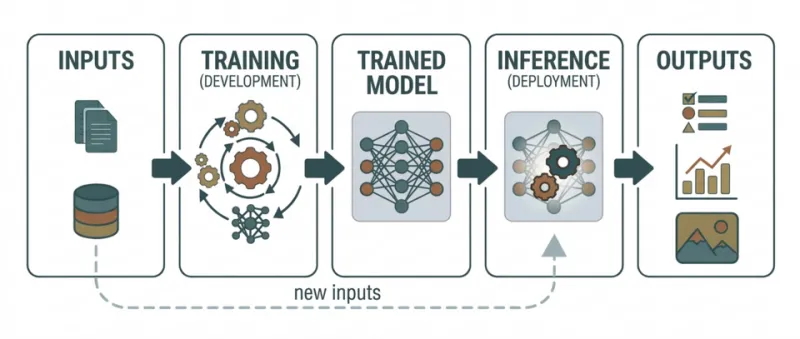
Photo: Generated and edited with Genspark (Nano Banana 2); prompt drafted with assistance from ChatGPT 5.2, Public domain, via Wikimedia Commons
Somewhere in a Fortune 500 company this morning, an AI agent approved a $40,000 vendor invoice without a human ever opening the purchase order. Elsewhere, an agent escalated a customer complaint to a legal review queue, and another declined a loan modification application. None of these decisions appear on any org chart. None of them carry a signature.
This is the quiet management crisis of 2025: enterprises are distributing decision-making authority to software agents faster than they are distributing accountability for the consequences. The reporting lines that once made it clear who answers for a decision — the manager who approved, the director who delegated, the VP who owned the process — have no explicit equivalent in agentic architectures. And unlike a junior employee, an agent cannot be interviewed after the fact, cannot explain its reasoning under pressure, and cannot be held to a performance review.
The Vacuum Nobody Budgeted For
Consider a scenario now playing out across US financial services firms. A customer-service agent — the AI kind — receives a fraud dispute. Trained on historical resolutions, it authorizes a chargeback that later turns out to be part of an organized fraud ring. Total loss: several hundred thousand dollars across affected accounts. The post-incident review convenes, and the first question is the oldest one in corporate governance: who approved this?
The uncomfortable answer is that nobody did, and everybody did. The model was trained by one team, deployed by another, governed by a risk committee that reviewed the framework but not the individual decision, and monitored by an operations group that saw only aggregate metrics. Every layer of the stack performed its defined function. None of them owned the decision.
Legal scholars have a term for diffuse responsibility: the problem of many hands. Agentic AI industrializes it. When an autonomous system makes thousands of decisions daily, each individually defensible under its operating parameters, the collective outcome can be a policy failure that no single person sanctioned.
Authority Without an Owner Is a Liability
The instinctive response from many boards has been to slow agent deployment or confine agents to advisory roles. That instinct is understandable but increasingly impractical. The competitive pressure to automate decision workflows — in claims processing, supply chain exceptions, IT incident triage — is enormous, and rivals will not wait for perfect governance. The realistic path forward is not to halt agent authority but to structure it the way enterprises structure human authority: explicitly, with limits, oversight, and named ownership.
A practical framework has four components.
First, a decision-rights ledger. Before an agent goes live, the team should document every category of decision it can make, the monetary and legal thresholds involved, and — critically — the named human executive who owns each category. If no one will claim ownership of a decision type, the agent should not be authorized to make it. This single exercise routinely surfaces authority that was granted by accident, buried in a prompt configuration nobody reviewed since launch.
Second, reversibility classification. Not all decisions carry equal risk. An agent that routes a support ticket makes a reversible choice; an agent that terminates a customer account or wires funds makes an irreversible one. Enterprises should require human confirmation for irreversible actions above defined thresholds, and design agent workflows so that reversibility is a first-class property, not an afterthought.
Third, decision forensics. When an agent acts, the system must capture not just the outcome but the reasoning trail: inputs, model version, confidence scores, and the policy constraints in effect. This is the agentic equivalent of an audit log, and it is what transforms an unexplainable outcome into an investigable one. Teams that skip this step will find that their incident postmortems devolve into speculation.
Fourth, periodic authority review. Agent permissions drift. Models get updated, prompts get edited, and thresholds get loosened during a busy quarter. Quarterly reviews of agent authority — treated with the same seriousness as access-control audits — keep the decision-rights ledger honest.
The Questions Worth Asking Before You Delegate
For executives evaluating agentic deployments, a short list of questions cuts through vendor enthusiasm. Who, by name, is accountable when this agent errs? Can we reconstruct why it made any specific decision, months later? What is the largest irreversible action it can take without a human in the loop? And if we had to disable it tomorrow, would the fallback process still function?
Vendors rarely volunteer these answers, because the honest ones are unflattering. But the enterprises that thrive with agentic AI will not be the ones that moved fastest — they will be the ones that moved with their accountability structures intact. The org chart was always more than bureaucracy. It was a map of who answers when things go wrong. It is time the software was added to it.